
Dame Vera Lynn Children's Charity visits Victoria Park's new inclusive play area
- 04/11/2026
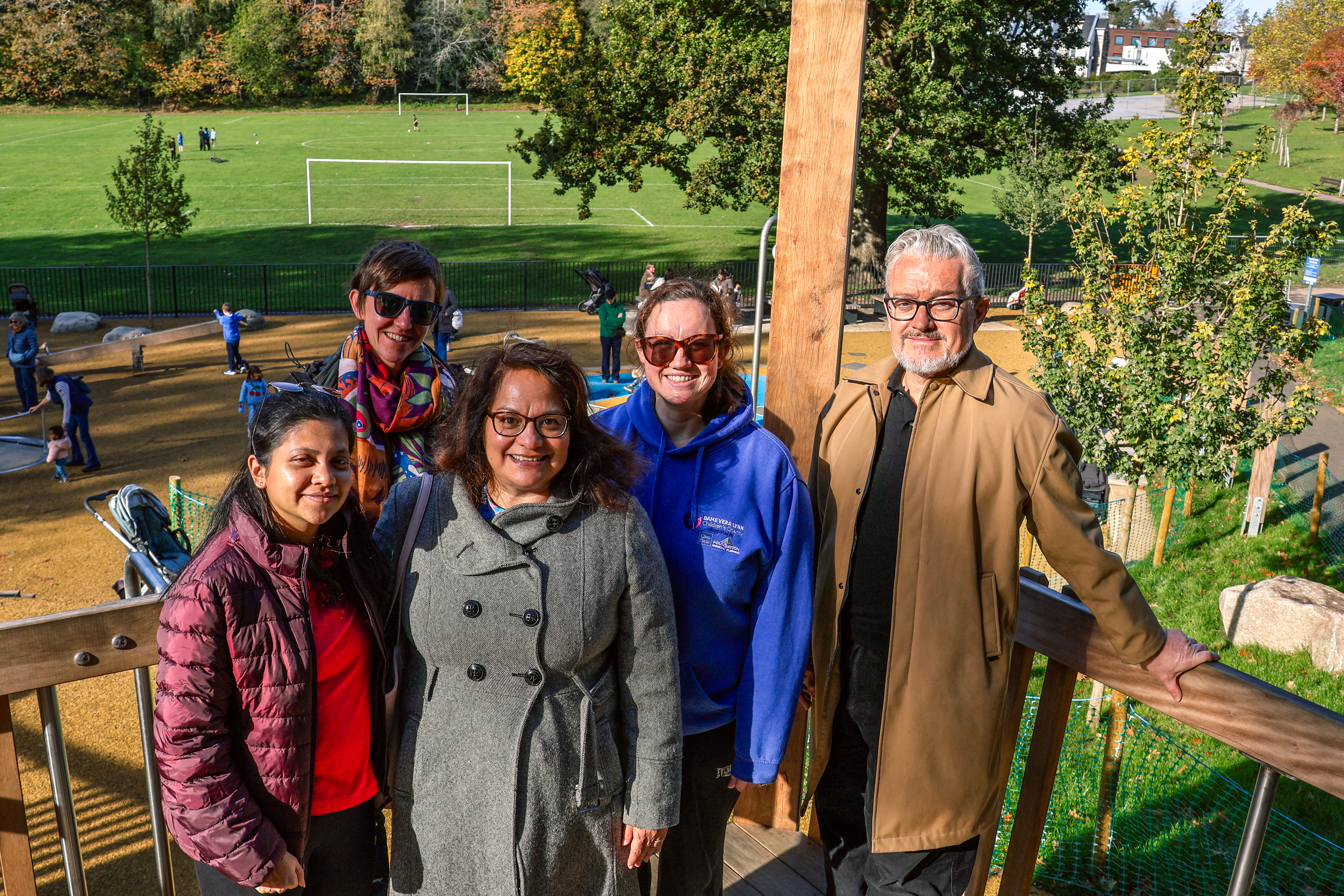
Representatives from Dame Vera Lynn Children's Charity visited Victoria Park in Haywards Heath this week to explore the park's newly refurbished play area and see how community feedback helped shape its inclusive design.
Based in Chailey, the charity which supports children with cerebral palsy and other motor learning impairments, met with council representatives to discuss the importance of accessible play spaces and the role they play in helping children and families enjoy the outdoors together.
Victoria Park's upgraded play area opened earlier this year following a refurbishment designed to create a more welcoming, accessible and inclusive environment for local families. During the visit, charity representatives were given a tour of the new facilities and learned how feedback from residents helped influence the final design.
New features include:
- An accessible play deck with step-free access
- An accessible roundabout
- A swing with back support
- Enhanced toddler play equipment
- Improved pathways throughout the play area
- Additional seating and picnic benches
The visit highlighted the important role inclusive play spaces can play for children with cerebral palsy and other motor learning impairments. Traditional playgrounds can present barriers to participation, while accessible equipment and thoughtful design help create opportunities for children of different abilities to play together, build confidence and enjoy the physical, social and developmental benefits of outdoor play.
Glenys Creese, Chief Executive Officer of Dame Vera Lynn Children’s Charity said:
“Inclusion is about more than simply being able to access a space; it’s about being able to take part, join in and enjoy the experience alongside others. For children with cerebral palsy and other motor learning impairments, the right environment can open up opportunities to play, explore, develop confidence and build friendships. We hope to see more communities thinking about how their outdoor spaces can work for children of all abilities.”
Extensive consultation played a key role in shaping the Victoria Park refurbishment. Residents were invited to provide feedback at multiple stages of the project, helping to refine the designs and identify priorities for improvement. Emphasis was placed on understanding the needs of disabled residents and park users, helping to ensure the finished play area reflects the needs of the community it serves.
Simon Hughes, Director of People and Commercial Services at Mid Sussex District Council said:
"Our parks are for the community, and local people are best placed to tell us what matters most. Residents played an important role in shaping Victoria Park's new play area, with accessibility a key consideration throughout. It's fantastic to see those ideas reflected in the finished space and being enjoyed by families."
During the visit, council representatives also spoke with residents enjoying the park. Feedback was positive, with many welcoming the improved accessibility and inclusive equipment. Residents also suggested more shade around the play area, and the Council is now exploring opportunities for additional tree planting in response, demonstrating how community feedback continues to shape improvements beyond the completion of the project.
Victoria Park is one of several green spaces benefiting from investment across Mid Sussex. Through its Green Spaces Engagement Hub, the Council continues to work with residents to shape improvements. Several schemes, including the refurbishment of Mount Noddy Recreation Ground, have already been completed, while feedback from local communities is helping to shape the next generation of projects across the district.
Residents can find out more, subscribe for updates and help shape local projects through the Council's Engagement Hub, ensuring parks and green spaces continue to reflect the needs and priorities of the communities that use them.
ENDS